
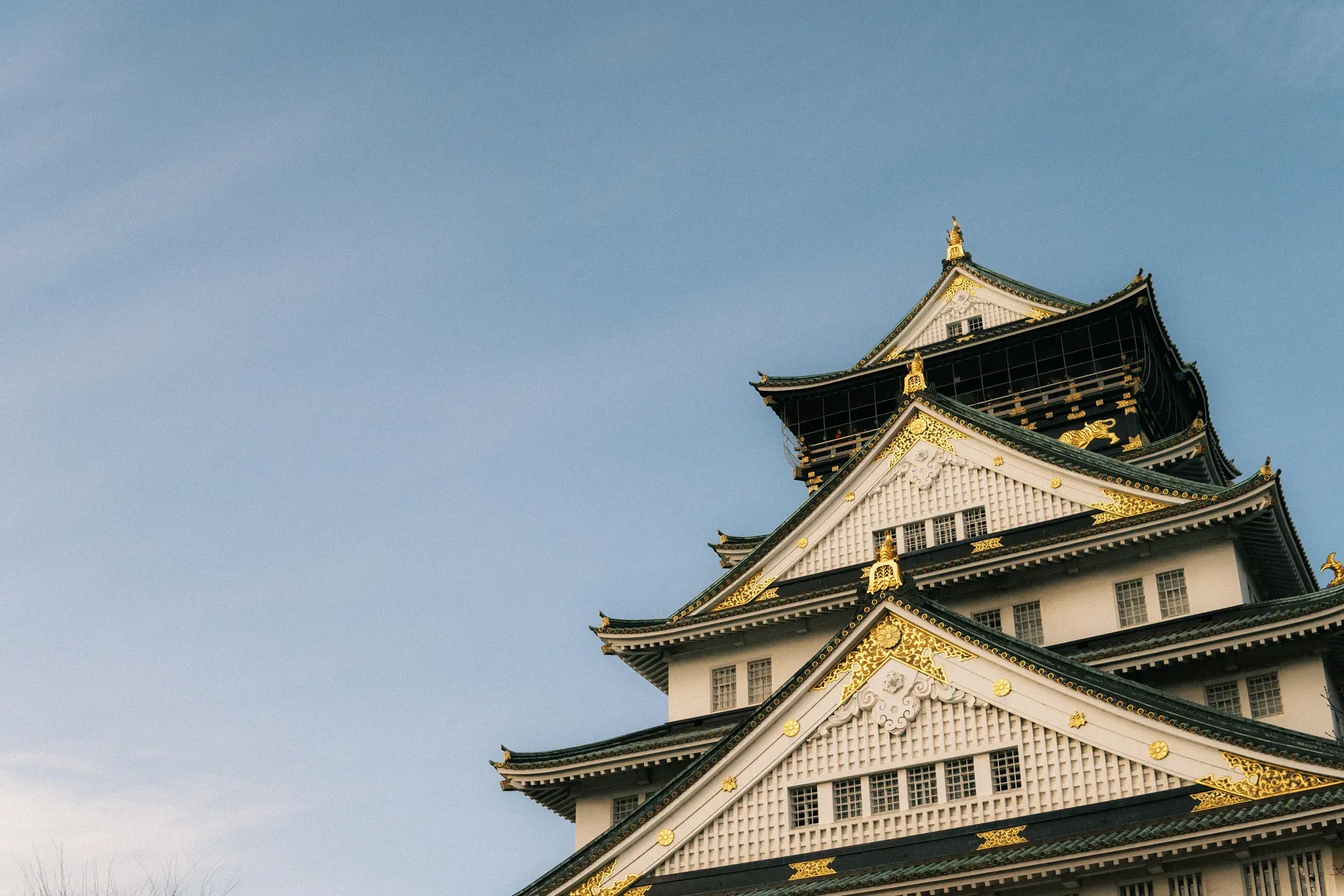
Walking the 105.6-hectare park grounds costs nothing, but climbing the eight-story main tower requires a 1,200 JPY adult ticket. The tower operates daily from 09:00 to 17:00, cutting off final admissions at 16:30.
Osaka Castle operates daily from 09:00 to 17:00. Last admission to the main tower is at 16:30. Management extends these operating times during the peak Sakura season and the Golden Week holidays.
| Day | Hours | Note |
|---|---|---|
| Monday–Sunday | 09:00–17:00 | Last entry at 16:30 |
The main tower shuts down completely from December 28 through January 1 for the New Year holiday. The surrounding park grounds remain accessible during these dates without an admission fee.
Adult admission to the main tower costs 1,200 JPY following the 2025 price increase. Children 15 and under enter the museum for free. The surrounding 105.6-hectare park grounds require no ticket to explore.
The Osaka Amazing Pass covers the full admission cost for the main tower and the Gozabune boat ride.
Planning your visit to Osaka Castle? Find tours with free cancellation and skip-the-line options.
View All ToursApril and November provide the optimal conditions to visit Osaka Castle. The 3,000 park cherry trees peak in April, while November brings sharp autumn foliage, though both periods guarantee massive crowds and 45-minute elevator waits. Skip August completely, as the exposed 1.5-kilometer walk from the train stations presents a severe heatstroke risk.
A complete visit takes 1.5 to 3 hours. The exact time depends on whether you explore the eight interior museum floors or just walk the 105.6-hectare park. Peak seasons like Golden Week stretch this timeline, as elevator waits can reach 45 minutes and physical ticket lines exceed half an hour.
Scan the on-site QR code or purchase tickets online to bypass physical booth lines that regularly exceed 30 minutes. The Osaka Amazing Pass covers your entry to both the main tower and the inner moat boat ride. Prepare for adult admission to double to 1,200 JPY in 2025.
Ride the elevator to the 5th floor immediately upon entry. Climb the final three flights of stairs to the 50-meter observation deck, then descend through the museum floors. Elevator wait times easily exceed 45 minutes during Golden Week and the April cherry blossom season.
Train stations sit 1.5 to 2 kilometers from the main tower across exposed park paths. The 20-minute walk lacks shade, creating a high risk of heatstroke during July and August. Pay the fee for the electric road train to skip the harsh midday sun.
Enter the park through the southwest Otemon Gate to pass the 108-ton Tako-ishi megalith and sheer stone walls. Stop at the Osaka Museum of History across the street first. Their scale model clarifies the fortress layout before you navigate the 105.6-hectare grounds.
Guards strictly prohibit photography on the 3rd and 4th museum floors to protect 16th-century artifacts. Drones are banned across the entire park. Stay after sunset when floodlights illuminate the 55-meter tower until 23:00 daily.
Adult admission costs approximately 1,200 JPY due to a scheduled price increase for 2025. Children 15 and under enter for free. The surrounding 105.6-hectare park grounds cost nothing to explore.
The main tower opens daily from 09:00 to 17:00, with final entry at 16:30. Management extends these hours during the spring cherry blossom season and Golden Week. The interior closes completely from December 28 to January 1.
Advance booking is not required for individuals. Buying tickets online or via on-site QR codes lets you bypass physical ticket booth lines that often exceed 30 minutes. The Osaka Amazing Pass provides free entry to the tower and the Gozabune boat ride without a separate purchase.
Most visitors spend 1.5 to 3 hours exploring the main tower and surrounding grounds. Walking from nearby train stations adds 15 to 20 minutes each way. Entering through the southwest Otemon Gate provides direct views of the stone walls and moats.
An external elevator and internal lifts provide wheelchair access up to the 5th floor. Visitors must use stairs to reach the top three museum levels and the 55-meter-high observation deck. Some park paths feature steep slopes or uneven gravel.
Photography is strictly banned on the 3rd and 4th floors to protect historical artifacts. Flash is prohibited in most indoor areas. Drones are entirely banned throughout the park, while staff restrict tripods inside the tower and crowded zones.
April and November offer peak visual conditions with 3,000 blooming cherry trees and autumn foliage. August brings extreme humidity and heatstroke risks on the exposed 1.5-kilometer walk from the train stations. Elevator wait times during the spring Sakura season can exceed 45 minutes.
Browse verified tours with free cancellation and instant confirmation.
Find Tours