
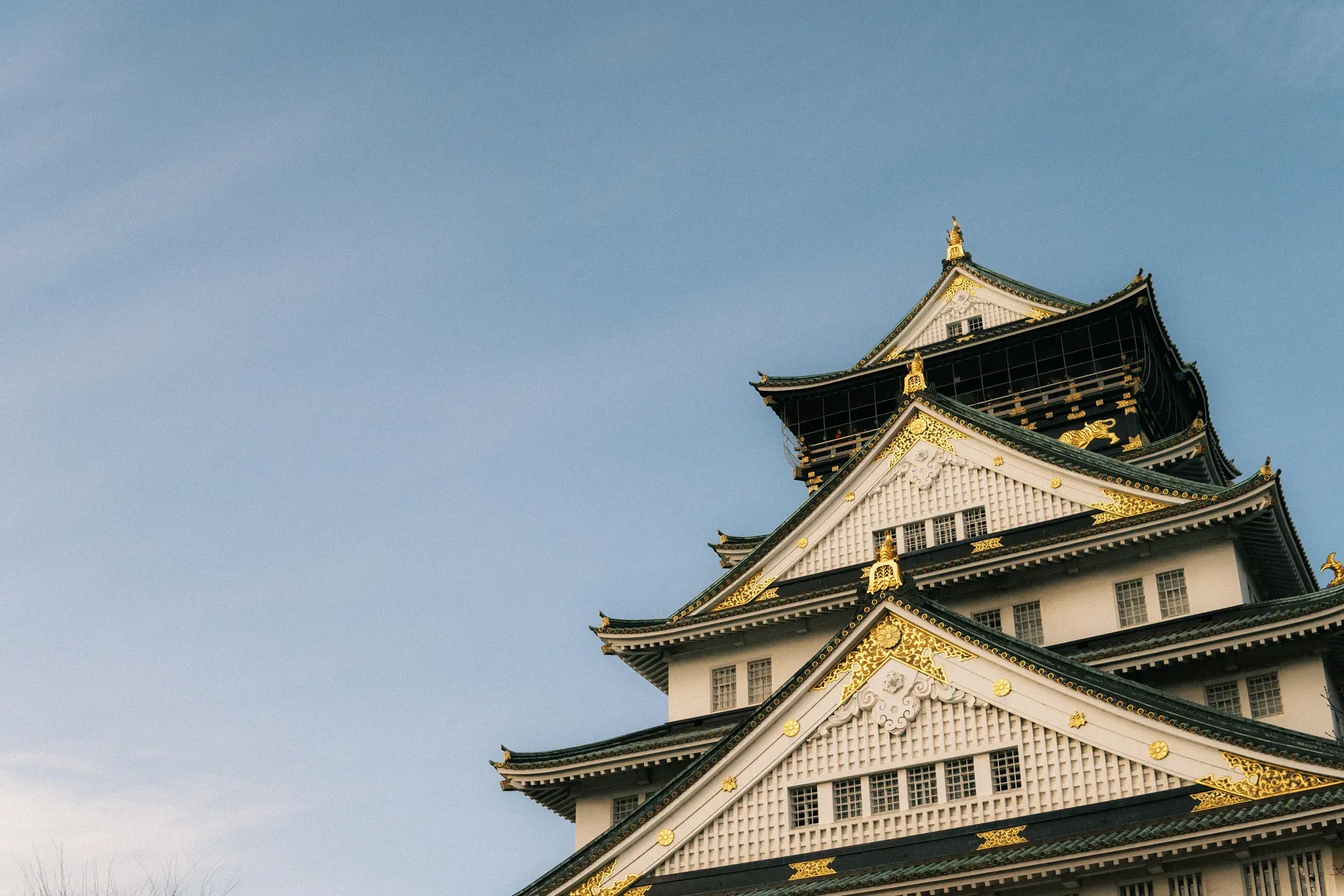
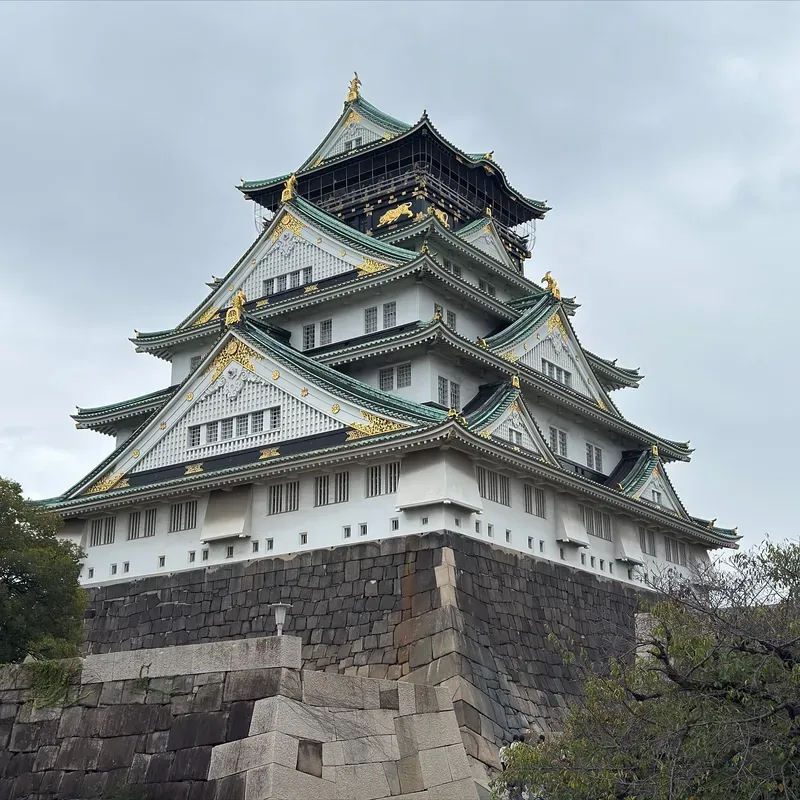
Fifty-five meters of ferroconcrete and green-tiled roofing rise above the Uemachi Plateau in central Osaka. The 1931 reconstruction of Toyotomi Hideyoshi's 16th-century fortress anchors a 105.6-hectare park surrounded by sheer stone walls and water-filled moats.
Fifty-five meters of white walls and gold-leaf accents dominate the skyline of Chūō-ku. Osaka Castle operates as both a modern museum and a massive public park covering 105.6 hectares. The central tower visitors see today is a 1931 ferroconcrete reconstruction. It houses eight internal floors of historical artifacts, armor, and interactive displays detailing the unification of Japan. Two raised platforms of landfill, supported by sheer stone walls, elevate the structure above a network of defensive moats. The entire complex sits on the northern end of the Uemachi Plateau, providing a natural elevation advantage over the surrounding flatlands.
Walking from the nearest train station takes 15 to 20 minutes across exposed gravel paths. Summer temperatures in August bring extreme heat and humidity, making the approach physically demanding. Visitors arrive at the Otemon Gate on the southwest side to face the fortress's primary defenses. Massive granite blocks, cut and transported without modern machinery, form the foundation. The Octopus Stone alone weighs 108 tons and spans 11.7 meters across. Guardhouses and original turrets line the outer perimeter, offering a stark contrast to the glass-and-steel skyscrapers of the nearby Osaka Business Park.
Inside the tower, an elevator carries guests to the fifth floor. You must climb stairs for the final three levels to reach the observation deck. The top floor provides a 360-degree view of the city from 50 meters above the ground. Expect 45-minute wait times for the elevator during the April cherry blossom season. Buying digital tickets in advance bypasses the physical box office line entirely. The surrounding park features multiple secondary fortifications, including original storehouses that survived the centuries. Electric road trains run along the main paths, charging a small fee to transport visitors who want to avoid the long walk from the outer gates to the inner citadel. Check the official website for operating hours, as these trains stop running during heavy rain.
The surrounding grounds contain several distinct zones. The Nishinomaru Garden occupies the western section, requiring a separate entry fee. It features a sprawling lawn and a former guest house used for state visits. To the east, the Osaka-jo Hall hosts international concerts and sporting events, drawing crowds that mix with museum visitors. Food stalls and permanent cafes line the main approach from the train station, selling takoyaki and matcha ice cream. The sheer scale of the property means you will walk several kilometers during a standard visit. Wear appropriate footwear and carry water, especially during the humid summer months.
Toyotomi Hideyoshi initiated construction on the Uemachi Plateau in 1583. He designed the fortress to act as the center of a newly unified Japan, choosing the site of the former Ishiyama Hongan-ji temple. Tens of thousands of laborers dug moats and raised stone walls over a 15-year period. The completed structure stood as the largest and most formidable military installation in the country. The main tower featured black walls covered in gold leaf, designed to intimidate approaching armies. Hideyoshi's death in 1598 left the compound to his young heir, Hideyori, and set the stage for a massive power struggle.
Tokugawa Ieyasu attacked the stronghold in 1614 during the Winter Campaign. His forces filled the outer moats after a brief peace treaty, stripping the defenders of their primary advantage. The following year, the Summer Campaign ended in the complete destruction of the original buildings and the defeat of the Toyotomi clan. The Tokugawa shogunate took control in the 1620s. They rebuilt the main tower and expanded the defensive walls to erase the previous regime's legacy. They buried the original Toyotomi stone walls deep underground, raising the ground level by several meters. Lightning struck the new keep in 1665. The resulting fire burned the wooden structure to the ground, leaving the stone foundation empty for 266 years.
Local citizens funded a massive rebuilding effort in 1931, raising 1.5 million yen. Architects chose ferroconcrete over traditional wood to ensure longevity. The new design replicated the exterior of the Tokugawa-era building but incorporated modern museum facilities inside. It survived the firebombing of Osaka during World War II with only minor damage, though several secondary buildings in the park burned down. The military used the site as an armory during the war, making it a primary target for American air raids. Unexploded ordnance from this period occasionally surfaces during modern park renovations.
A comprehensive restoration in 1997 updated the exhibits, cleaned the copper roofing, and added an external elevator for wheelchair access. The museum now displays over 10,000 artifacts, including folding screens, swords, and dioramas. Exhibits rotate every two months to preserve delicate paper and silk items. Photography remains strictly prohibited on the third and fourth floors to protect these authentic 16th-century documents and armor pieces. Visitors can view a detailed scale model of the original Toyotomi layout at the Osaka Museum of History, located just a five-minute walk from the southwest park entrance.
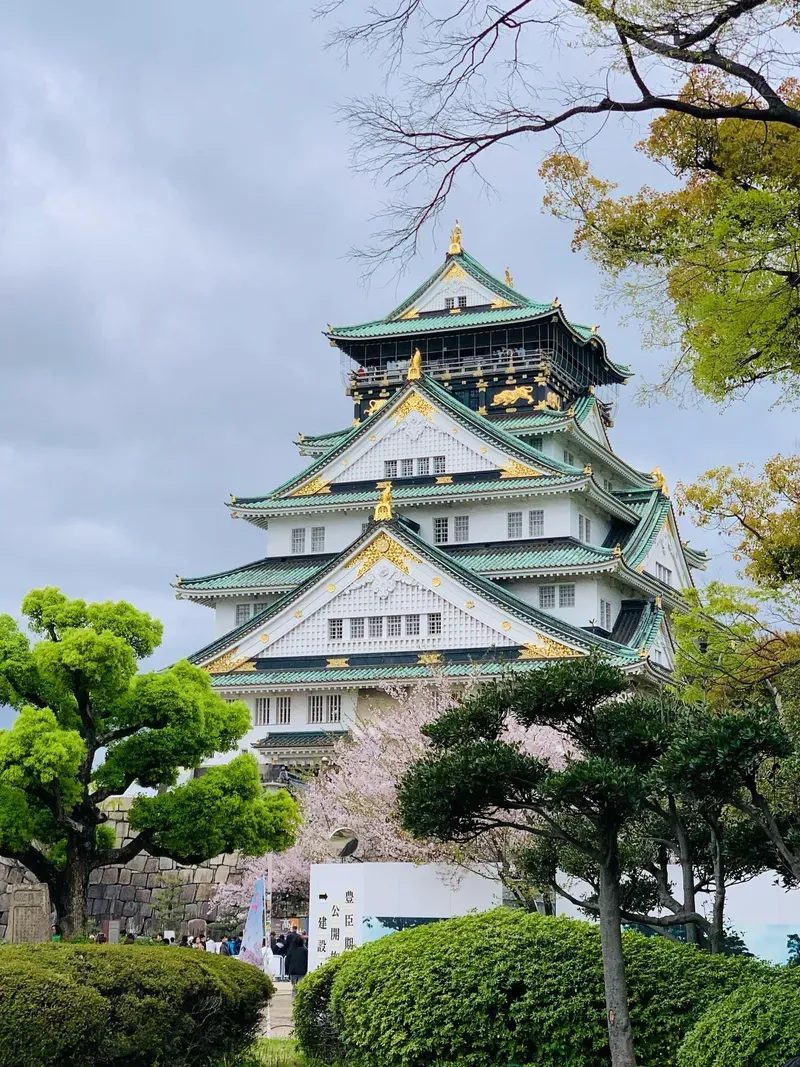
Granite walls reaching 30 meters high form the primary defensive perimeter. Builders transported these massive stones from quarries across the Seto Inland Sea, marking them with the crests of the feudal lords who donated them. You can still see these carved insignias on the blocks near the outer gates. The construction technique, known as burdock piling, locks the unhewn rocks together without mortar. This flexible design allows the walls to absorb seismic shocks. The Tako-ishi, or Octopus Stone, sits near the Sakura Gate. It measures 5.5 meters tall by 11.7 meters wide and weighs 108 tons, making it the largest single stone in the complex.
Two distinct moats encircle the central complex. The outer moat spans up to 75 meters across and features steep earthen banks on the exterior edge. The inner moat directly protects the Honmaru (main circle) with sheer stone drops. Gold-leaf-covered Gozabune boats run 20-minute circuits on the inner water, tracing the exact route samurai patrols took 400 years ago. These boats operate daily, but close during heavy rain or strong winds. The water level fluctuates depending on the season, exposing different layers of the foundation stones.
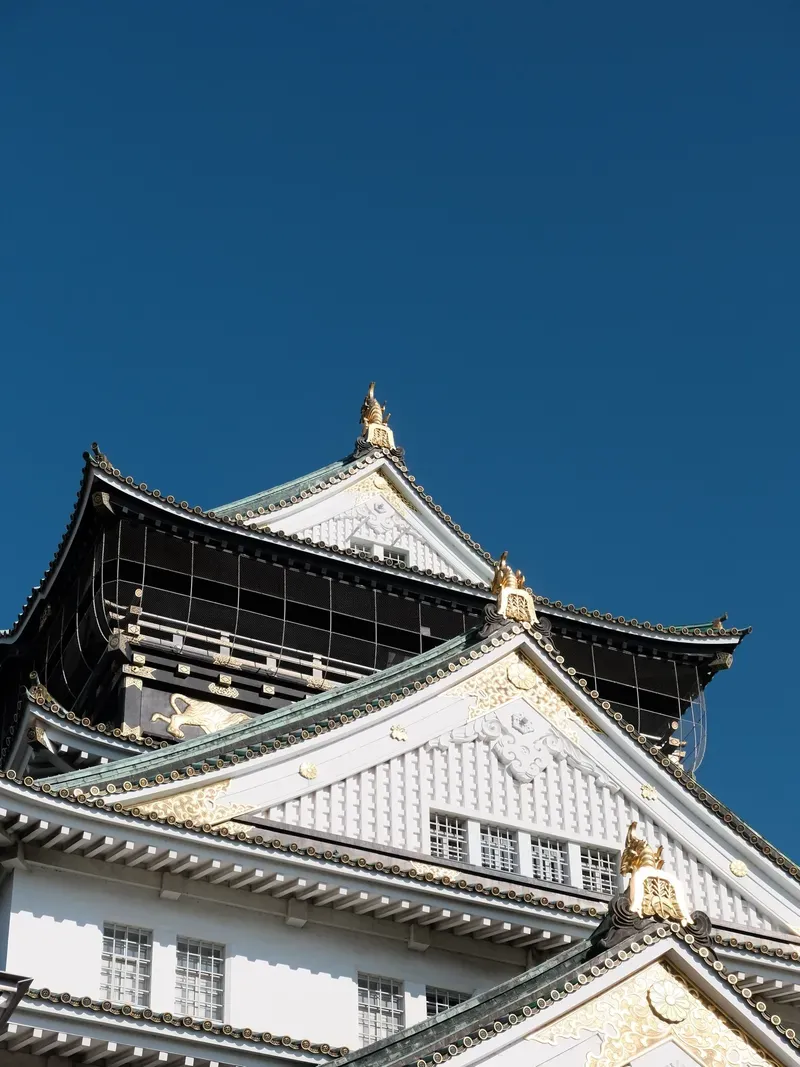
The main tower features five visible exterior stories and eight internal floors. Green copper tiles cover the sweeping roofs, weighing hundreds of tons. Golden sea creatures with tiger heads, called shachihoko, sit at the highest peaks to protect the building from fire. The exterior design blends two distinct historical periods. The lower floors reflect the black-painted walls and gold cranes of the Toyotomi era, while the upper levels feature the white plaster favored by the Tokugawa shogunate. The eighth-floor observation deck sits 50 meters above the ground, enclosed by heavy wire mesh. Visitors can look down at the Miraiza complex, a former 1931 military headquarters now converted into a dining and shopping center. Binoculars on the deck cost 100 JPY and provide clear views of the distant Ikoma Mountains.
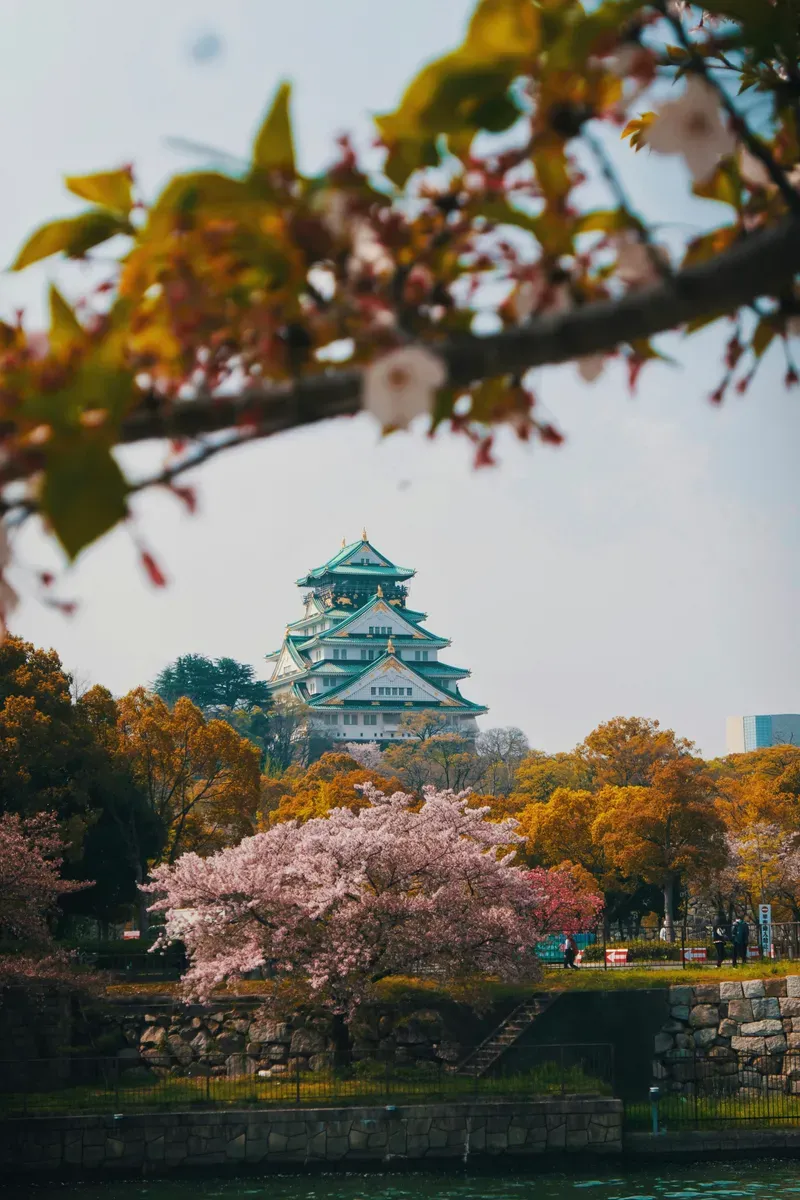
Osaka Castle represents the physical manifestation of Japan's transition from constant civil war to unified rule. Toyotomi Hideyoshi used the massive scale of the fortress to project absolute authority over rival warlords. The surrounding city of Osaka grew outward from these stone walls, establishing the merchant-class culture that still defines the region. Modern residents view the park as the geographic and emotional center of the metropolis, utilizing the 105.6 hectares for daily recreation, concerts at the nearby Osaka-jo Hall, and seasonal festivals. The castle frequently appears in Japanese cinema and television, often acting as the backdrop for historical dramas.
The grounds contain 3,000 cherry trees and 1,270 plum trees. Late March brings thousands of locals to the Nishinomaru Garden for hanami (flower viewing) parties. The 6.5-hectare lawn provides clear sightlines to the illuminated main tower. City officials light the concrete structure every evening from sunset until 23:00. The plum orchard on the east side of the park blooms a month earlier, offering a quieter alternative to the massive spring crowds. Photographers gather near the outer moat at dawn to capture the reflection of the tower in the still water.
Inside the museum, a life-sized replica of Hideyoshi's portable Golden Tea Room dominates the exhibits. Artisans recreated the structure using solid gold leaf on wooden frames, matching the exact dimensions recorded in 16th-century tea ceremony texts. The original room traveled with the warlord to military encampments to intimidate generals and impress foreign diplomats. You can view this replica on the third floor, where museum staff strictly enforce a no-photography policy. On the first floor, visitors pay 500 JPY to wear replica samurai helmets and surcoats, engaging directly with the visual identity of the Sengoku period. Staff assist with the heavy garments and allow you to take photos with your own camera against a painted folding screen.
The current 1931 tower has stood longer than the Tokugawa-era building it replaced, which burned down after just 39 years.
The 108-ton Octopus Stone was cut and shipped across the Seto Inland Sea from the island of Shodoshima.
Toyotomi Hideyoshi built a tea room entirely covered in gold leaf, which he dismantled and carried to military encampments.
The Tokugawa shogunate buried the original Toyotomi stone walls deep underground to erase the previous regime's legacy.
The park contains a designated plum orchard with over 1,200 trees that bloom a full month before the famous cherry blossoms.
Golden tiger-headed fish statues, called shachihoko, sit on the roof to summon mythical water and prevent fires.
Visitors can rent replica samurai helmets and surcoats for 500 JPY on the museum's first floor.
No. The original 1583 fortress was destroyed in 1615. The current main tower is a ferroconcrete reconstruction completed in 1931.
Adult admission to the main tower is 600 JPY, but this will increase to 1,200 JPY in 2025. Children 15 and under enter for free. The surrounding park grounds require no ticket.
Yes. An internal elevator takes visitors up to the 5th floor. You must climb stairs to reach the 8th-floor observation deck unless you require mobility assistance.
Most visitors spend 1.5 to 3 hours exploring the site. This includes walking from the train station, touring the museum floors, and viewing the outer walls.
Photography is permitted in most areas, but it is strictly prohibited on the 3rd and 4th floors. These levels house light-sensitive historical artifacts and original armor.
Yes. The pass includes free admission to the main tower. It also covers the 20-minute Gozabune boat ride on the inner moat.
The 3,000 cherry trees typically reach peak bloom between late March and early April. The Nishinomaru Garden offers the best viewing spots during this window.
Drones are strictly prohibited across the entire 105.6-hectare park. Tripods and selfie sticks are also restricted inside the main tower and crowded outdoor areas.
Osakajokoen Station on the JR Osaka Loop Line is 10 minutes away. Tanimachi 4-chome Station on the subway provides the best access to the Otemon Gate.
The main tower is open daily from 09:00 to 17:00. It only closes for the New Year holiday period from December 28 to January 1.
Browse verified tours with free cancellation and instant confirmation.
Find Tours